You accepted an offer on your home. The contract is signed. And now you wait while the buyer decides whether they actually want to buy it.
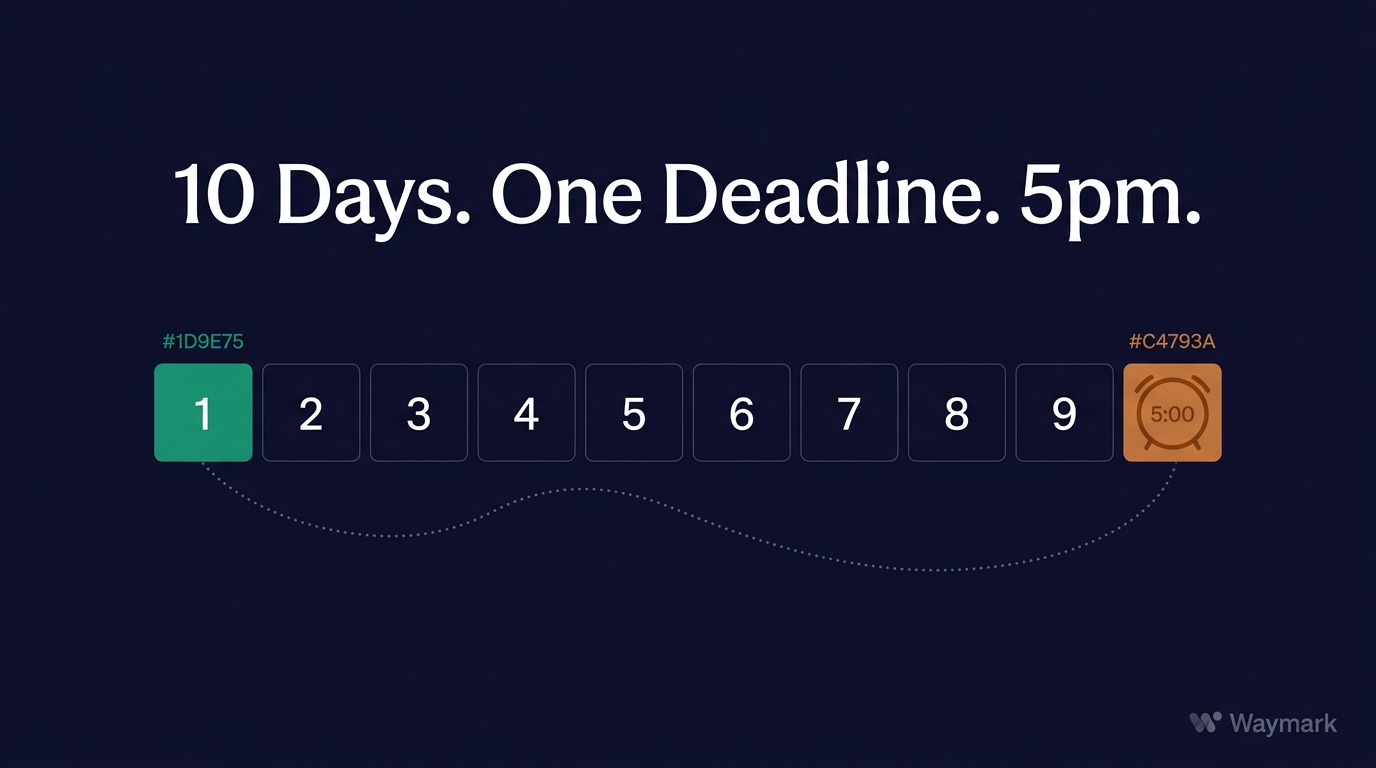
That waiting period is called the option period. It is a negotiated window, typically 7 to 10 calendar days, during which the buyer has the unrestricted right to terminate the contract for any reason. Bad inspection. Cold feet. Found a better house. Does not matter. During the option period, the buyer can walk away, get their earnest money back, and owes you nothing except the option fee they already paid (Texas Real Estate Research Center).
For sellers, this is the most nerve-wracking stretch of the transaction. Your home is off the market, but it is not sold. Here is everything you need to know to get through it.
- What Is the Option Period?
- Where It Lives in the Contract
- How Long Is the Option Period?
- How Days Are Counted
- What Is the Option Fee?
- Option Fee vs. Earnest Money
- What Happens During the Option Period
- The 5pm Deadline: What Sellers Must Know
- What Happens When the Option Period Expires
- Can the Buyer Extend the Option Period?
- 5 Option Period Mistakes Sellers Make
- How Waymark Tracks the Option Period
- 2026 TREC Contract Updates Affecting the Option Period
- Frequently Asked Questions
What Is the Option Period?
The option period is a negotiated number of calendar days after the contract is fully executed during which the buyer can terminate the contract for any reason and receive a full refund of their earnest money. The buyer pays a non-refundable option fee, delivered to the escrow agent (title company), in exchange for this right. It is designed to give the buyer time to conduct due diligence on the property, including home inspections, specialty inspections, and any other evaluation they want to complete before fully committing to the purchase (TRERC).
The option period is not required by Texas law. It is a negotiable contract term. But it is included in the standard TREC One to Four Family Residential Contract that is used in the vast majority of Texas residential transactions, and most buyers include one. Sellers can negotiate the length and the fee amount, but refusing an option period entirely is uncommon and can discourage buyers from making an offer.
Where It Lives in the Contract
The option period is governed by Paragraph 5 of the TREC residential contract. Specifically:
Paragraph 5A covers the delivery of earnest money and the option fee. Both must be delivered within 3 calendar days of the effective date of the contract.
Paragraph 5B (Termination Option) grants the buyer the "unrestricted right to terminate the contract" during the agreed-upon number of days. The contract explicitly states that this right is purchased by the buyer through the option fee and applies for any reason or no reason at all (Texas Realtors).
When reviewing an offer on your home, look at Paragraph 5 carefully. Two numbers matter: the option fee amount and the number of option period days. Both are negotiable.
How Long Is the Option Period?
The length is negotiated between buyer and seller. Typical ranges in the 2026 Texas market:
- 3 to 5 days: Short option periods. More common in competitive markets where the buyer wants to signal seriousness. Tight timeline for inspections.
- 7 to 10 days: The most common range in the current market. Gives the buyer time for a general inspection, specialty inspections (foundation, roof, septic if applicable), and time to review results and negotiate repairs.
- 10 to 14 days: Used for older homes, luxury properties, or complex transactions. More common in the 2026 buyer-friendly market where sellers are more willing to agree to longer periods (Neuhaus Realty, 2026).
What sellers should consider: A shorter option period reduces your uncertainty. Your home is off the market during this time, and a buyer who terminates on day 9 of a 10-day option period has cost you 9 days of market exposure. However, pushing for too short a period can discourage buyers from making offers or lead to rushed inspections that create problems later. The standard 7 to 10 day range is reasonable for most transactions.
How Days Are Counted
This is where sellers and buyers both make mistakes. The TREC contract uses calendar days, not business days. Weekends and holidays count. Here is how to count correctly:
The effective date is Day Zero. The effective date is the date when both parties have signed and initialed all required pages of the contract. You do not count this day as part of the option period (Silberman Realty).
Day One is the day after the effective date. If the contract is fully executed on Monday June 15, Day One is Tuesday June 16.
Example: Contract effective date is Monday June 15. The option period is 10 days. Day 1 is June 16 (Tuesday). Day 10 is June 25 (Thursday). The buyer must deliver written termination notice by 5pm on June 25 or the option period expires and the buyer loses the unrestricted right to terminate.
Weekends and holidays count. If the last day of the option period falls on a Saturday, Sunday, or legal holiday, the deadline is still that day. The July 1, 2026 TREC contract updates add a formal definition of "Legal Holiday" that includes New Year's Day, MLK Day, Presidents' Day, Memorial Day, Juneteenth, Independence Day, Labor Day, Veterans Day, Thanksgiving Day, the Friday after Thanksgiving, and Christmas Day (Republic Title, 2026).
The 3-day delivery deadline for the option fee uses the word "within," which means Day One is the day after the effective date. If the effective date is Monday, the option fee must be delivered by Thursday. If that third day falls on a Saturday, Sunday, or legal holiday, the buyer gets until the next business day to deliver it.
What Is the Option Fee?
The option fee is a non-refundable payment that purchases the buyer's right to terminate during the option period. Under the current TREC 20-18 contract, the buyer delivers the option fee to the escrow agent (the title company), not directly to the seller. The escrow agent then releases the option fee to the seller. The buyer authorizes this release without further notice or consent (TREC). Think of it as the price the buyer pays for the ability to walk away.
Typical option fees in the 2026 Texas market range from $100 to $500 for most residential transactions. In competitive situations, buyers may offer $750 to $1,000 or more to signal seriousness to the seller (LRG Realty, 2026).
Key facts about the option fee:
- It is non-refundable regardless of whether the buyer terminates or closes
- It must be delivered within 3 calendar days of the effective date
- If the buyer closes on the purchase, the option fee is credited toward the purchase price
- If no dollar amount is stated as the option fee, or if the buyer fails to deliver it within the deadline, the buyer does not have the unrestricted right to terminate. The option period effectively does not exist
- There is no Texas statute that caps option fees. The amount is entirely negotiable
What sellers should watch for: A low option fee (under $100) on an expensive home may signal a buyer who is not committed. A buyer offering $50 on a $500,000 home is buying the right to tie up your property for 10 days for less than the cost of dinner. Consider the option fee relative to the home price and the length of the option period when evaluating offers.
Option Fee vs. Earnest Money: Two Different Things
| Option Fee | Earnest Money | |
|---|---|---|
| Amount | $100 to $500+ (negotiable) | 1% to 3% of purchase price (negotiable) |
| Paid to | Escrow agent (title company) | Title company / escrow agent |
| Refundable? | No, never | Yes, during option period. After option period, depends on contract terms. |
| Purpose | Buys the right to terminate | Good-faith deposit showing buyer is serious |
| Delivery deadline | Within 3 calendar days of effective date | Within 3 calendar days of effective date |
| At closing | Credited toward purchase price | Applied toward purchase price |
These are tracked separately. Do not confuse them. The earnest money is your security that the buyer is serious. The option fee is the price the buyer paid for the right to change their mind.
What Happens During the Option Period
From the seller's perspective, here is the typical sequence of events during the option period:
Days 1 to 3: The buyer schedules and completes a general home inspection (usually 2 to 3 hours). The inspector examines the home's structure, systems, roof, plumbing, electrical, HVAC, and general condition. The seller should plan to be out of the home during the inspection.
Days 3 to 5: The buyer reviews the inspection report. If the general inspector flags concerns, the buyer may schedule specialty inspections: foundation evaluation, roof inspection, septic (if applicable), pool, pest, or environmental testing.
Days 5 to 8: If the buyer wants repairs or credits, they submit a repair amendment (sometimes called an amendment to the contract). This is a negotiation. The seller can agree, counter, or decline. Common outcomes include the seller agreeing to repair specific items, offering a credit at closing, reducing the purchase price, or declining and the buyer deciding whether to proceed anyway.
Days 8 to 10: The buyer decides whether to move forward. If they terminate, they must deliver written notice by 5pm on the last day. If the option period expires without written termination, the buyer has committed to the purchase and cannot terminate under the option provision.
During this entire period, your home is effectively off the market. Most listing agents mark the property as "pending" or "option pending" in the MLS. Other buyers may lose interest or move on. This is why the option period is costly to sellers even when the buyer eventually proceeds: you lose market momentum.
The 5pm Deadline: What Sellers Must Know
This is the most important deadline in the entire option period. The buyer must deliver written termination notice to the seller by 5:00 PM local time where the property is located on the last day of the option period. Not 5:01. Not 5:15. Not "I sent it at 4:58 but you did not check your email until 6." The TREC contract says "time is of the essence," which means deadlines are strict (TRERC).
What counts as written notice: The contract (Paragraph 21) specifies acceptable methods of delivery: hand delivery, mail, overnight courier, or electronic transmission (email, fax). A phone call does not count. A text message is risky and may not satisfy the contract's requirements. Written notice delivered by email to the address specified in the contract is the safest and most common method.
What happens if the buyer misses the deadline: The unrestricted right to terminate expires. The buyer is now committed to the purchase. They still have other contract provisions that could allow termination under specific circumstances (financing contingency, title objections, survey issues), but none of those are unrestricted. Each has narrower conditions and strict requirements. The easy exit is gone.
What sellers should do at 5pm on the last day: Check your email and any other communication channels specified in the contract. If no written termination has been delivered, the option period has expired and your transaction moves forward. Do not assume the deal is dead just because the buyer's agent mentioned "concerns" during the option period. Until you receive written termination notice, the contract is alive.
What Happens When the Option Period Expires
Once the option period expires without written termination, the buyer's unrestricted right to terminate is gone. The transaction moves into the next phase. Upcoming deadlines typically include:
- Financing approval: The buyer's lender must approve the loan by the date specified in the contract
- Appraisal: The lender orders an appraisal to confirm the property value supports the loan amount
- Survey delivery: If a survey is required, it must be delivered by the deadline
- Title commitment: The title company provides a title commitment for review
- Closing: The closing date specified in the contract
Each of these has its own deadline and its own consequences if missed. Aria tracks all of them automatically with email and text reminders so nothing expires without notice. Learn more about the closing process in Texas.
Can the Buyer Extend the Option Period?
Yes, but only with the seller's written agreement and typically with an additional option fee. Texas case law suggests an option period cannot be "extended" without the payment of an additional option fee that offers something of value to the seller, not just a token amount (TRERC).
Extensions are handled through TREC's Amendment to Contract form (Paragraph 6). The additional option fee for the extension is paid directly to the seller at the time the amendment is executed.
Sellers should know: You are not required to agree to an extension. If the buyer asks for more time, consider why. If the inspection revealed a legitimate issue that requires a specialty inspection (foundation, for example), a short extension may be reasonable. If the buyer is simply stalling, declining the extension and holding firm on the original deadline is within your rights. Every additional day is a day your home is off the market.
5 Option Period Mistakes Sellers Make
1. Accepting a long option period with a low option fee. A 14-day option period with a $50 option fee means the buyer tied up your property for two weeks for less than the cost of groceries. Negotiate either a shorter period or a higher fee that reflects the cost of taking your home off the market.
2. Not understanding how days are counted. Calendar days, not business days. The effective date is Day Zero. Weekends and holidays count. If you miscount and think the option period expires on Thursday when it actually expires on Wednesday, you could miss the moment when the buyer's exit right ended.
3. Panicking during the inspection. Every inspection finds something. That is what inspections are for. A list of findings does not mean the buyer will terminate. Many buyers use the inspection to negotiate credits or repairs, not to walk away. Do not assume the worst until you see the repair amendment or termination notice in writing.
4. Over-conceding on repair requests. Sellers often agree to every repair request out of fear that the buyer will terminate. But the option period is also a negotiation. You can counter with a partial repair list, a credit at closing, or a price reduction. Understanding how the TREC contract works gives you the confidence to negotiate rather than simply concede.
5. Not tracking the deadline. The 5pm cutoff on the last day of the option period is the most important deadline in the early part of your transaction. If you lose track of the date, you cannot properly evaluate whether the buyer's behavior signals a problem or is normal due diligence. Know the date. Watch the clock.
How Waymark Tracks the Option Period
Aria tracks the option period deadline automatically from the moment the contract is executed. The seller receives email and text reminders before the deadline so nothing catches them off guard. When the option period expires without written termination, Aria updates the transaction timeline and shifts focus to the next set of deadlines: financing approval, appraisal, survey delivery, and closing.
On the Manage plan ($1,199), a licensed broker is available during the option period to help evaluate repair requests, advise on counter-amendment strategy, and provide guidance if the buyer requests an extension. This is one of the five critical moments where broker support can directly affect the seller's financial outcome.
On the Launch plan ($699), Aria provides AI-powered guidance on repair amendments, helping sellers understand which items are safety issues that buyers typically push on versus cosmetic preferences that can reasonably be declined.
See Waymark pricing | Compare your options
2026 TREC Contract Updates Affecting the Option Period
Effective July 1, 2026, TREC adopted several updates to the standard residential contract that affect option period calculations:
Formal definition of "Legal Holiday." The updated contract now includes a specific definition of legal holidays as they relate to earnest money and option fee delivery deadlines. The list references Texas Government Code Section 662.003 and includes New Year's Day, Martin Luther King Jr. Day, Presidents' Day, Memorial Day, Juneteenth, Independence Day, Labor Day, Veterans Day, Thanksgiving Day, the Friday after Thanksgiving, and Christmas Day (Republic Title, 2026).
Paragraph 12B (Broker Compensation). Updated language provides greater clarity regarding broker compensation, reflecting the post-NAR settlement changes in how buyer agent compensation is handled.
Paragraph 20 (Governmental Requirements). New language regarding governmental reporting requirements, including FinCEN compliance documentation.
If your transaction uses a contract executed on or after July 1, 2026, the updated form applies. Aria and Waymark's broker are current on all 2026 TREC contract updates.
Frequently Asked Questions
Can the seller terminate during the option period?
No. The option period is the buyer's right, not the seller's. The seller cannot terminate the contract during the option period unless the buyer defaults on a contract term, such as failing to deliver earnest money within the required timeframe.
What happens to the option fee if the buyer terminates?
The seller keeps the option fee. It is non-refundable regardless of whether the buyer terminates or closes. If the buyer terminates during the option period, the option fee is the seller's compensation for the days the home was off the market.
What happens to earnest money if the buyer terminates during the option period?
The buyer gets the earnest money back in full. During the option period, the buyer has the unrestricted right to terminate and receive a refund of their earnest money deposit. After the option period expires, the earnest money is handled according to the specific terms of the contract.
Does the option period start when the offer is submitted?
No. The option period starts on the effective date of the contract, which is the date when both buyer and seller have signed and initialed all required pages. The effective date is Day Zero. Day One of the option period is the day after.
What if the option period ends on a weekend?
The deadline still applies. TREC contracts use calendar days, not business days. If the last day of the option period falls on a Saturday, Sunday, or legal holiday, the 5pm written termination deadline is still that day. However, the 3-day delivery deadline for the option fee does get extended to the next business day if day 3 falls on a weekend or legal holiday.
Can a buyer terminate after the option period expires?
Not under the option provision. After the option period, the buyer loses the unrestricted right to terminate. Other contract provisions may allow termination under specific, narrower conditions: financing contingency if the loan is not approved, title objections, or survey-related issues. Each has its own requirements and limitations.
How much should the option fee be?
There is no standard amount. Most residential transactions in Texas use $100 to $500. In competitive markets, $750 to $1,000 is common. As a seller, evaluate the option fee relative to the home price and the length of the option period. A higher fee signals a more committed buyer.
Should sellers refuse the option period entirely?
It is legal to refuse, but uncommon and generally not advisable. Most buyers expect an option period and may not make an offer on a home where the seller refuses one. The option period benefits the transaction by allowing the buyer to conduct due diligence before closing, which reduces the risk of post-closing disputes and lawsuits. A reasonable option period with a fair option fee is standard practice in Texas.
The Option Period Is the Cost of Certainty
The option period is uncomfortable for sellers. Your home is off the market while the buyer decides. But it exists for a reason: it lets buyers discover and address issues before closing rather than after. A buyer who terminates during the option period costs you time. A buyer who discovers problems after closing costs you a lawsuit.
Know the deadlines. Understand the fees. Track the days. If you are selling with Waymark, Aria handles the tracking automatically. If you are selling on your own, mark the option period expiration date on your calendar, set a reminder for 5pm on that day, and do not assume anything until you see it in writing.
Waymark Real Estate | TREC License 639078 | Brokered by Marelli Properties | waymarkre.com
Related Articles
- Texas Seller's Disclosure: The Complete Guide
- How to Read a TREC Offer in Texas
- Closing Without a Listing Agent: What to Expect
- How a CMA Prices Your Home
- Best Flat Fee MLS Companies in Texas (2026)
Sources
- Texas Real Estate Research Center, "Option Period Basics," trerc.tamu.edu, July 2025
- Texas Realtors, "Time Calculation," texasrealestate.com
- Republic Title, "TREC Contract Changes 2026," republictitle.com, May 2026
- LRG Realty, "What Is the Option Period in Texas Real Estate?" lrgrealty.com, June 2026
- Neuhaus Realty, "Texas Option Period Explained," neuhausre.com, March 2026
- Silberman Realty, "How to Count Days in a TREC Contract," silbermanrealty.com, April 2025
- Creekstone RE, "Option Period in Texas Real Estate: Seller's Guide," creekstonere.com, 2026
- Dwellverse, "Texas Option Period Explained," dwellverse.io, March 2026