Updated June 2026 | Waymark Real Estate | TREC License 639078
In 2025, the median Texas home spent 67 days on the market before going under contract, up 23 percent from the year before, according to Texas REALTORS. Add a closing period of 30 to 45 days and the total timeline from listing to funded sale runs 90 to 112 days for most sellers in the state's four major markets.
That headline number hides significant variation. A well-priced home in a Houston suburb can go under contract in 30 days. An overpriced listing in a cooling Austin neighborhood can sit for four or five months. Understanding what drives days on market, and what you can control as a seller, is the difference between a clean transaction and a price reduction you did not plan for.
This guide covers what days on market actually measures, how it varies across Houston, San Antonio, Austin, and Dallas-Fort Worth, what factors compress or extend it, and how listing on the MLS affects your timeline.
- What Days on Market Actually Measures
- Statewide Texas Data: 2025 and 2026
- Days on Market by Texas City
- What Drives Days on Market
- Pricing Strategy and Its Effect on DOM
- How MLS Listing Affects Your Timeline
- Best Time of Year to List in Texas
- How Long Does Closing Take After an Offer?
- How to Shorten Your Days on Market
- Frequently Asked Questions
What Days on Market Actually Measures
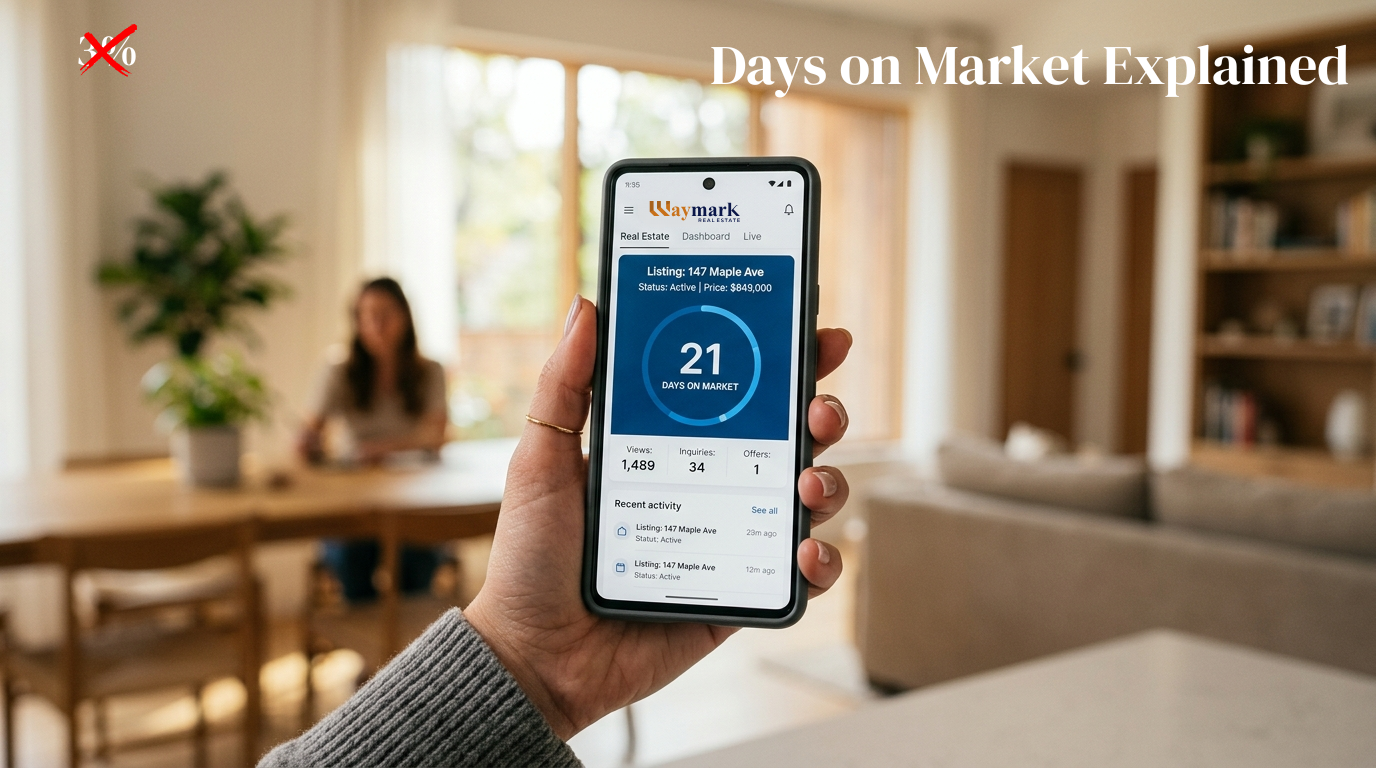
Days on market, abbreviated as DOM, counts the number of calendar days a home is actively listed for sale before a signed contract is reported to the MLS. The clock starts when the listing goes live and stops when a contract is marked pending. It does not include the time it takes to close after the offer is accepted.
Two versions of DOM appear in market reports and it matters which one you are reading.
Active DOM includes all currently listed homes, including properties that have been sitting unsold for months. This number is always higher than sold DOM because stale, overpriced, or problematic listings continue counting every day until they are withdrawn or sold.
Sold DOM counts only homes that successfully went under contract. This is the more useful number for sellers because it reflects what is actually happening in the transaction market, not the waiting room.
"As of June 2025, the median DOM for sold listings in the Austin-area MLS was 30 days — nearly half the median DOM of active listings — even though overall buyer activity remains below average."
— Team Price Real Estate, June 2025
When a home sits on the market for more than 30 to 45 days without going under contract, buyers notice. A long DOM signals to buyers that something may be wrong, even when nothing is. Price reductions become more likely and the seller's negotiating position weakens. This is why pricing correctly from the start matters more than any other single decision a seller makes.
Statewide Texas Data: 2025 and 2026
The Texas housing market shifted meaningfully between 2023 and 2026. The pandemic-era seller's market has given way to a more balanced environment with rising inventory, longer timelines, and increased buyer leverage.
Metric 2024 2025 Q1 2026
Statewide median DOM
54 days
67 days
80 days
Total homes sold (TX)
331,000
335,390
N/A (quarterly)
Months of inventory
4.1 months
4.6 months
5.0 months
Statewide median price
$339,000
$335,000
~$332,000
Total time listing to close
~84 to 99 days
~97 to 112 days
~110 to 125 days
Sources: Texas REALTORS 2025 Year in Review; Ramsey Solutions Q1 2026 Texas Housing Report
Median days on market increased 23.1 percent in 2025, hitting an average of 67 days — a week longer than the year prior. By Q1 of 2026, homes were staying on the market for an average of 80 days and total inventory reached five months of supply. Five months is approaching the six-month threshold that economists define as a balanced market. For sellers, this means more competition from other listings, more importance placed on pricing and presentation, and longer timelines to plan around.
Days on Market by Texas City
Statewide averages matter less than the specific market where your home sits. Here is how the four major Texas markets compared in 2025 and early 2026.
City MLS Board Median DOM (2025) Median Home Price Inventory
Houston
HAR
55 days
$334,400
4.5 months
San Antonio
SABOR
55 to 70 days
~$310,000
4.5+ months
Austin
ACTRIS / Unlock MLS
70 to 85 days
$430,000 to $460,000
5.9 months
Dallas-Fort Worth
NTREIS
50 to 60 days
~$385,000
4.5 to 5 months
Sources: Texas REALTORS 2025 Year in Review; HAR April 2026 Housing Update; KXAN / Unlock MLS March 2026; Macrotrends NTREIS data
Houston (HAR)
In Houston, 89,012 homes sold in 2025, up 3 percent year over year, with a median of 55 days on market. As of April 2026, the Houston Association of Realtors reported 8,196 single-family homes sold, up 4.4 percent year over year, while the median price dipped to $332,000 and active listings rose 6.5 percent to 36,572 homes. Houston remains the fastest-moving of the four major markets, supported by continued job growth and a broader price range than Austin.
San Antonio (SABOR)
San Antonio has tracked closely with Houston on days on market, with SABOR data reflecting 55 to 70 days depending on price tier and zip code. The market has shifted toward buyers across the Sun Belt through 2025 and 2026. Sellers who price accurately from the first week see meaningfully shorter times to contract than those who test a higher price and reduce later.
Austin (ACTRIS / Unlock MLS)
As of March 2026, homes in the Austin metro are averaging 85 days on market according to Unlock MLS data tracked by KXAN. Austin experienced the sharpest correction of any major Texas market after the pandemic run-up. As of late May 2026, there were 16,991 active listings across the metro with a median price of $459,990. Correct pricing is more critical in Austin than in any other major Texas market right now.
Dallas-Fort Worth (NTREIS)
Macrotrends data from Realtor.com shows the Dallas area at a median of 50 days on market as of mid-2025. NTREIS data showed inventory increasing in several DFW counties through 2025, giving buyers more negotiating leverage, though long-term population growth and employment fundamentals continued to support baseline demand.
What Drives Days on Market
Days on market is the product of supply and demand at the local level. At the individual listing level, four factors explain most of the variation between a home that sells in three weeks and one that lingers for four months.
List Price Relative to Market
Price is the single most powerful variable a seller controls. Overpriced homes attract fewer showings, generate fewer offers, and accumulate DOM that signals difficulty to every buyer who views the listing history. In January 2025, 29.8 percent of homes in Texas sold with price drops, according to Houzeo. A price reduction after 30 or 45 days typically produces less activity than correct pricing from day one, because the reduction must overcome the stigma of the accumulated DOM.
Property Condition and Presentation
Buyers search online before they schedule a showing. The quality of photographs, the accuracy of the listing description, and the condition of the home in person all affect how quickly a showing converts to an offer. Homes that are clean, decluttered, and photographed professionally consistently move faster than comparable homes with poor photography or deferred maintenance.
MLS Exposure
A home not listed on the MLS reaches a fraction of the buyers that an MLS-listed home reaches. Research shows homes on the MLS sell for approximately 17.5 percent more than those not on the MLS, according to Houzeo. Buyer's agents search the MLS for their clients every day. Without MLS exposure, a seller competes only for buyers who happen to find a private listing.
Local Market Conditions
Inventory levels, interest rates, employment trends, and seasonal patterns in the specific zip code all influence how quickly buyers are moving. A neighborhood with three comparable active listings sells faster than one with twelve. A market with falling mortgage rates moves faster than one where rates are rising and buyers are waiting.
Pricing Strategy and Its Effect on DOM
The relationship between list price and days on market is not linear. Homes priced 5 to 10 percent above market value do not sell 5 to 10 percent slower. They often do not sell at all until they reduce, and by then they have accumulated enough DOM to signal difficulty to every buyer who sees the listing history.
The most effective pricing strategies for the current Texas market:
- Price to the current market, not to the peak. Sellers who bought or refinanced during the 2021 to 2022 peak are sometimes tempted to price based on what neighbors sold for then. That market no longer exists in most Texas zip codes.
- Price to generate showings in week one. The first seven days on market produce the highest concentration of buyer activity. A listing that generates multiple showings in week one has the leverage to hold price. A listing that generates two showings in three weeks does not.
- Build a reduction plan before you list. Decide in advance at what point and by how much you will reduce if the market does not respond. A planned reduction at day 21 is less damaging than a reactive reduction at day 45.
- Use comparable sold data, not active listings. Active listings tell you what other sellers are asking. Sold data tells you what buyers are actually paying. Aria builds a pricing analysis using comparable sales data for your area so your initial price is anchored to real transactions.
For a detailed guide on establishing your list price, see How to Price Your Home Without a Listing Agent in Texas.
How MLS Listing Affects Your Timeline
The MLS is the database that every buyer's agent in a market uses to find homes for their clients. When your home is on the MLS, it syndicates automatically to Zillow, Redfin, Realtor.com, and every other major home search platform. When it is not on the MLS, it is invisible to the vast majority of active buyers.
In Texas, the four major MLS boards are:
- HAR — Houston Association of Realtors, covering the greater Houston metro
- SABOR — San Antonio Board of Realtors, covering the greater San Antonio metro
- ACTRIS / Unlock MLS — covering the greater Austin metro
- NTREIS — North Texas Real Estate Information Systems, covering Dallas-Fort Worth
A licensed Texas broker must submit your listing to the MLS. Sellers have two options: hire a traditional listing agent who charges a percentage-based commission, or use a licensed flat fee brokerage that lists your home on the MLS for a fixed price. Both get your home on the same MLS.
Waymark lists Texas homes on HAR, SABOR, ACTRIS, and NTREIS for a fixed price starting at $699. Your listing appears on Zillow, Redfin, and Realtor.com the same as any other MLS listing. For a full explanation, see What Is a Flat Fee MLS Service in Texas.
Best Time of Year to List in Texas
Texas follows a predictable seasonal pattern that affects both how fast homes sell and what price they command.
Period Buyer Activity Typical DOM Price Outcome
January to February
Low
Longest
Below annual average
March to April
Rising fast
Shortening
At or above average
May to June
Peak
Shortest
Highest
July to August
Slightly declining
Moderate
Near peak
September to October
Moderate
Moderate to long
Near annual average
November to December
Low
Longest
Below annual average
Sources: List With Clever Texas home sale data; iBuyer.com seasonal analysis; Houzeo best time to sell in Texas
May is the fastest month — homes sell approximately 14 days faster than the annual average. June produces the highest median sale prices. Thursday is the best day to list on the MLS. A Thursday listing goes live in time for the full weekend, when buyers are most active in scheduling showings.
"Homes listed during spring often sell nearly twice as fast as winter listings, highlighting how seasonal demand affects the speed of home sales."
— iBuyer.com, citing FRED housing inventory data, January 2026
How Long Does Closing Take After an Offer?
Days on market ends when the contract is accepted. The closing process in Texas then takes an additional 30 to 45 days in most financed transactions.
- Option period (days 1 to 10 typically): The buyer pays a nominal fee for the unrestricted right to terminate the contract for any reason. Most inspections happen during this window. The seller may receive a repair amendment requesting concessions based on inspection findings.
- Financing and appraisal (days 10 to 25 typically): The buyer's lender orders an appraisal and processes the loan application. If the appraisal comes in below the contract price, the parties must negotiate the difference or the buyer may exercise their financing contingency.
- Title commitment and survey (days 15 to 30): The title company researches the property's ownership history, identifies any liens or encumbrances, and issues a title commitment.
- Final walkthrough and closing (days 30 to 45): The buyer conducts a final walkthrough to confirm the property's condition. Both parties sign closing documents, funds are wired, and the deed transfers.
The most common causes of closing delays are financing approval issues, inspection disputes, appraisal gaps, and title issues such as undisclosed liens. For a walkthrough of the offer and contract process, see How to Read a TREC Offer: What Every Texas Seller Needs to Know.
How to Shorten Your Days on Market
Most of what determines how fast a home sells is within the seller's control.
1. Price It Right From Day One
A home that sells in 30 days at the right price almost always nets more than a home that sells in 75 days after a price reduction. Run a comparative market analysis against actual sold transactions in your zip code, not active listings.
2. List on the MLS With Full Syndication
No other single action puts your listing in front of more qualified buyers simultaneously. Full MLS syndication means your home appears on Zillow, Redfin, and Realtor.com the same day it goes live. For sellers exploring this option, see How to Sell a House Without a Realtor in Texas.
3. Invest in Professional Photography
Over 95 percent of buyers search online before scheduling a showing. The photographs are the showing. Professional listing photography consistently produces more showings than seller-taken photos, and more showings produce faster offers.
4. Complete a Pre-Listing Inspection
A pre-listing inspection surfaces issues before buyers discover them during the option period. Sellers who address material deficiencies before listing avoid the negotiating disadvantage of a buyer repair amendment arriving after the contract is signed.
5. Complete Your Texas Seller's Disclosure Accurately Before Listing
The Texas Seller's Disclosure (SDBN 2-14) is a legally required document with 43 questions about the property's condition. Aria walks sellers through all 43 questions in plain English, explaining what each question asks and what the consequences of different answers are. Completing the disclosure accurately before listing removes a common source of contract terminations that extend effective DOM.
Frequently Asked Questions
How long does it take to sell a house in Texas?
In 2025, the statewide median was 67 days on market before contract, according to Texas REALTORS. Including the closing period, plan for 90 to 112 days total from listing to funded sale. Houston runs faster at around 55 days on market, Austin runs slower at 70 to 85 days, and DFW and San Antonio fall in between.
What is a good days on market number in Texas?
In the current market, under 45 days on market before a contract is considered a strong result. Under 30 days indicates the home was priced well and presented effectively. Over 75 days without a contract suggests a pricing, condition, or marketing issue that needs to be addressed.
Does a high days on market hurt my sale price?
Yes, consistently. Buyers interpret a long DOM as evidence that something is wrong. Offers that arrive after 60 or more days on market tend to come in lower than those that arrive in the first 30 days, because buyers assume the seller is now more motivated.
Can I reset my days on market in Texas?
Yes, by withdrawing a listing and relisting it. However, most MLS boards track cumulative DOM and many real estate search platforms display the full listing history. A relist can generate a brief spike in interest but is not a substitute for correct pricing from the start.
What is the best day of the week to list my Texas home?
Thursday. A listing that goes live on Thursday is active for the full weekend, when buyers are most likely to schedule showings. Studies of Texas MLS data consistently show Thursday listings sell faster and closer to list price than listings that go live earlier in the week.
Is Texas a buyer's or seller's market in 2026?
Most Texas metros are approaching a balanced market in 2026, with inventory between 4.5 and 6 months of supply statewide. Austin is the most buyer-favorable of the four major markets. Houston is the most seller-favorable, with the lowest inventory and fastest sales pace. San Antonio and DFW fall in between.
Can I sell my home on the Texas MLS without a traditional listing agent?
Yes. A licensed Texas brokerage can list your home on the MLS for a fixed price. Waymark Real Estate (TREC License 639078, brokered by Marelli Properties) lists Texas homes on HAR, SABOR, ACTRIS, and NTREIS with full Aria AI transaction support and licensed broker oversight. The Launch plan starts at $699. See waymarkre.com/pricing for full details.
Ready to List Your Texas Home?
Waymark provides full MLS exposure across HAR, SABOR, ACTRIS, and NTREIS with Aria AI on every contract and a licensed Texas broker available when it matters. Fixed price starting at $699. The protection is included. The percentage is not.
Start your listing at waymarkre.com
Waymark Real Estate | TREC License 639078 | Brokered by Marelli Properties
Related Articles
- How to Price Your Home Without a Listing Agent in Texas
- What Is a Flat Fee MLS Service in Texas?
- How to Sell a House Without a Realtor in Texas
- How to Read a TREC Offer: What Every Texas Seller Needs to Know
Sources
- Texas REALTORS, 2025 Real Estate Year in Review, via Houston Agent Magazine, March 2026
- Ramsey Solutions, Texas Housing Market Predictions 2026, Q1 2026
- Houston Association of Realtors, Monthly Housing Update April 2026
- KXAN / Unlock MLS, Austin Housing Market Data, March 2026
- ManageCasa, Texas Housing Market 2026 Guide
- Team Price Real Estate, Days on Market vs Days to Sell, June 2025
- Macrotrends / Realtor.com, Dallas Area Median Days on Market
- M&D Real Estate, DFW Housing Market Report 2025 Recap and 2026 Forecast
- List With Clever, Average Time to Sell a House in Texas: 2026 Data
- Houzeo, Best Time to Sell a House in Texas, 2026 Update
- iBuyer.com, When Is the Best Time to Sell a House in Texas? 2026 Update
- Houzeo, How to Sell a House By Owner in Texas, 2026 Update
- HomeLight, Why Days on Market Matters to Home Buyers, January 2026
- Texas Real Estate Research Center at Texas A&M University, Texas Housing Market Research