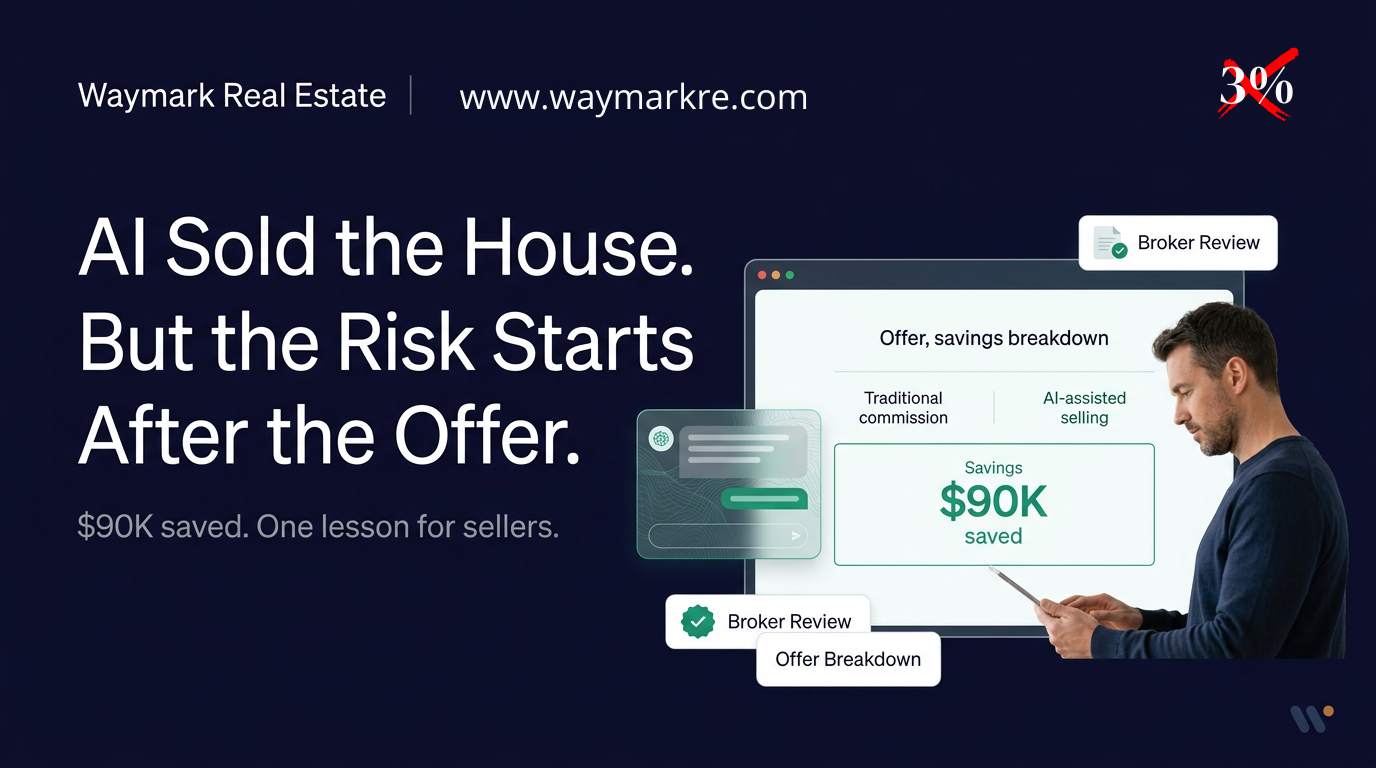
Homeowners are increasingly turning to AI to drive home sales, unlocking significant financial benefits by streamlining the marketing and listing process. By leveraging sophisticated tools, sellers can now navigate property transactions with greater efficiency and retain more of their home equity.
The Rise of AI in Real Estate
A transformative shift is occurring in the property sector as more homeowners leverage artificial intelligence to manage their home sales independently. This growing trend offers property owners a powerful alternative to traditional sales models, providing the sophisticated tools necessary to execute successful transactions while capturing substantial cost savings that were once surrendered to conventional commission structures.
How AI-Assisted Selling Works
Using AI, sellers can automate listing creation, source photography, stage homes virtually, and navigate the initial steps to post to a Multiple Listing Service. By leveraging these tools, homeowners can manage the bulk of the prep work and marketing.
Real-World Examples
Stuart Thompson, a tech reporter for The New York Times, has become the most talked-about example of AI-assisted home selling. When he and his wife decided to list their Hudson Valley home, he skipped the traditional real estate agent and turned to Google's Gemini AI chatbot instead. Originally, the couple and several agents they consulted estimated their home would sell for roughly US$550,000. Thompson wasn't excited about handing over a 3% listing commission, as much as US$30,000, to a seller's agent. So he began experimenting with AI. Using Gemini, Thompson crafted his listing, sourced a photographer, staged the home and navigated the steps to post it to a Multiple Listing Service (MLS) equivalent. Within 24 hours, showings were booked. Soon after, three offers arrived — all over asking. AI even helped him assess which to accept. The winning bid wasn't the highest, but it was a solid offer above US$600,000. Thompson hired a lawyer to handle the paperwork. Even with that expense, he and his wife cleared US$90,000 more than expected on the sale and the buyers agreed to cover their own agent's 2% commission, saving another US$12,000. In all, Thompson saved US$36,000 in commissions. Robert Levine, CEO of strategic consulting firm ComOps, had a similar story. He used ChatGPT to sell his Florida home, and received five offers in five days, ultimately closing at nearly US$1 million, about US$100,000 more than agents had predicted.
Navigating Commissions
Commissions are often up for negotiation, note industry experts. There is also the option to find a brokerage that charges a flat fee, or you can sell the home yourself. Regulators in various countries are increasingly scrutinizing commission structures to ensure market transparency and prevent practices that might discourage competition among agents.
How Waymark Simplifies the Process
Waymark's platform actively addresses these DIY challenges by providing an integrated suite of tools designed for automated listing creation, sellers disclosure assistance, professional-grade marketing materials, broker support at offer, inspection repairs, and streamlined transaction management. By simplifying these complex logistical hurdles from navigating MLS access constraints to managing professional-grade marketing, Waymark effectively bridges the gap between the limitations of a standard DIY approach and the comprehensive support of traditional full-service representation, ensuring sellers can confidently manage sales anywhere.